What is the ELAVAY report, and what did ELAVAY 2026 find?
ELAVAY is Archō's syndicated advocacy intelligence study. Patient advocacy organizations rate the pharma and biotech companies they work with, benchmarked back to 2015 across 20+ disease states. ELAVAY 2026 found that reach is not respect, access to company leadership scores lowest, and advocacy interest exceeds industry support in all 30 program areas.
What is ELAVAY?
The syndicated advocacy intelligence platform from Archō. It shows how patient communities perceive your company, where you lead, where gaps remain and what must happen next.
Each year, ELAVAY reaches out to 20,000 disease-state nonprofits that support patients, so the study captures the full spectrum of patient advocacy organizations. Fielding is invite-only, to verified advocacy organizations and leaders.
Advocates rank up to five pharma or biotech companies they worked with in the last 12 to 18 months, then rate their top three on a 1 to 7 scale, where 4.0 marks the industry average. Sections include partnerships and programs support, federal and state government policy, corporate image and reputation, contribution to health equity, patient assistance programs, scale of selflessness, expanding access and education, and diversity, equity and inclusion.
ELAVAY is a snapshot in time. It measures perception, never a team's effort or impact.
What did ELAVAY 2026 find?
Three findings held across every 2026 cut.
Read together, the message is clear. Advocates want more from industry in every program area, they want it most on equity, and they want a seat with the leaders who decide. Companies that close those gaps build partnerships that hold. The diabetes cut does not field demand tables.
How does ELAVAY methodology work?
Four steps: prioritize, survey, interview and validate. Fielding is invite-only, and nothing ships before integrity checks.
- Prioritize. Define the topics and communities that matter most this cycle.
- Survey. Invite-only fielding to verified advocacy organizations and leaders.
- Interview. Qualitative depth that explains the "why" behind the numbers.
- Validate. Data-integrity checks and weighting before anything ships.
The methodology is built so findings hold in front of leadership. ELAVAY measures perception, never a team's effort or impact, and is benchmarked back to 2015. Matt Toresco designed the work from inside the advocacy seat, as someone who worked in patient advocacy, runs his own nonprofit and lived the patient side as a chronic pain patient.
What does 'reach is not respect' mean?
A big footprint in the advocacy community is not the same as a good relationship with it.
ELAVAY 2026 measures pharmaceutical and biotechnology companies two ways. Reach is the breadth of advocacy attention a company earns. Regard is the quality of the relationship as advocacy organizations rate it. The winners are not the same. Scale buys reach. It does not buy respect.
Bring both scores into the room. That is how teams win budget and earn a seat where decisions get made. Read the white paper, Reach Is Not Respect
Which ELAVAY reports are available?
Cross-industry benchmarks, disease-state cuts and custom work.
- Benchmark Report. Where you stand on engagement, trust and impact.
- Disease-state reports. The 2025/26 cycle includes oncology, immunology, mental health and rare disease. Request the oncology briefing
- Health Equity & SDOH. Where equity and social determinants of health change access, trust and outcomes.
- Echos in Research. Where the patient voice shows up in research, and where it is missing.
- Policy Pulse. Where policy pressure is moving and what advocates expect next.
- BIOADVOCATE Benchmark. A separate study of the size, budget, alignment, focus and tactics of patient advocacy functions across pharma, biotech and medical device.
Can I see how my company scored in ELAVAY?
Yes, in private. Archō does not publish a leaderboard.
Archō builds a private one-page meeting pack for your company from ELAVAY survey responses that name it, with sample sizes shown on every line. Matt Toresco walks your team through it in a 25-minute meeting: your goals, your findings, what they mean and the next step. Company Standing then gives your full results across every scored section.
Archō confirms your company from your work email before it shares any finding. Request your meeting pack
How do advocacy leaders use ELAVAY?
To know where they stand, bring advocates into the plan and show the business what changed.
"The ELAVAY Survey was the foundation of our continued defense as the industry's number one patient advocacy function for over ten years."John Hoffman, formerly Leader, Patient Advocacy and Government Affairs, Johnson & Johnson Innovative Medicine
"The feedback from the survey is quite insightful. We all work hard, but until you know the community's perception, you really don't know if you are effective. The survey provides feedback, and the granular comments offer better insights about their challenges."Bruce Taylor, formerly Leader, Patient Advocacy, Dexcom
Frequently asked questions
Who takes the ELAVAY survey?
Patient advocacy organizations, professional societies and community-based organizations. Each year, ELAVAY reaches out to 20,000 disease-state nonprofits that support patients, and fielding is invite-only to verified organizations and leaders.
How is ELAVAY fielded?
Through four steps: prioritize, survey, interview and validate. Fielding is invite-only to verified advocacy organizations and leaders, and data-integrity checks and weighting come before anything ships.
Who buys ELAVAY?
Pharma, biotech and medical device teams in patient advocacy, corporate affairs and franchise leadership, plus genomics labs, payers and PBMs, and specialty pharmacy.
Does ELAVAY publish company rankings?
No. Public ELAVAY findings are industry-level only. Each company sees its own results in private.
What scale does ELAVAY use?
A 1 to 7 scale, where 4.0 marks the industry average.
Are ELAVAY findings public?
Industry-level findings, like the three 2026 findings on this page, are public. Company-level findings are private to each company and shared only after Archō confirms the requester's company.
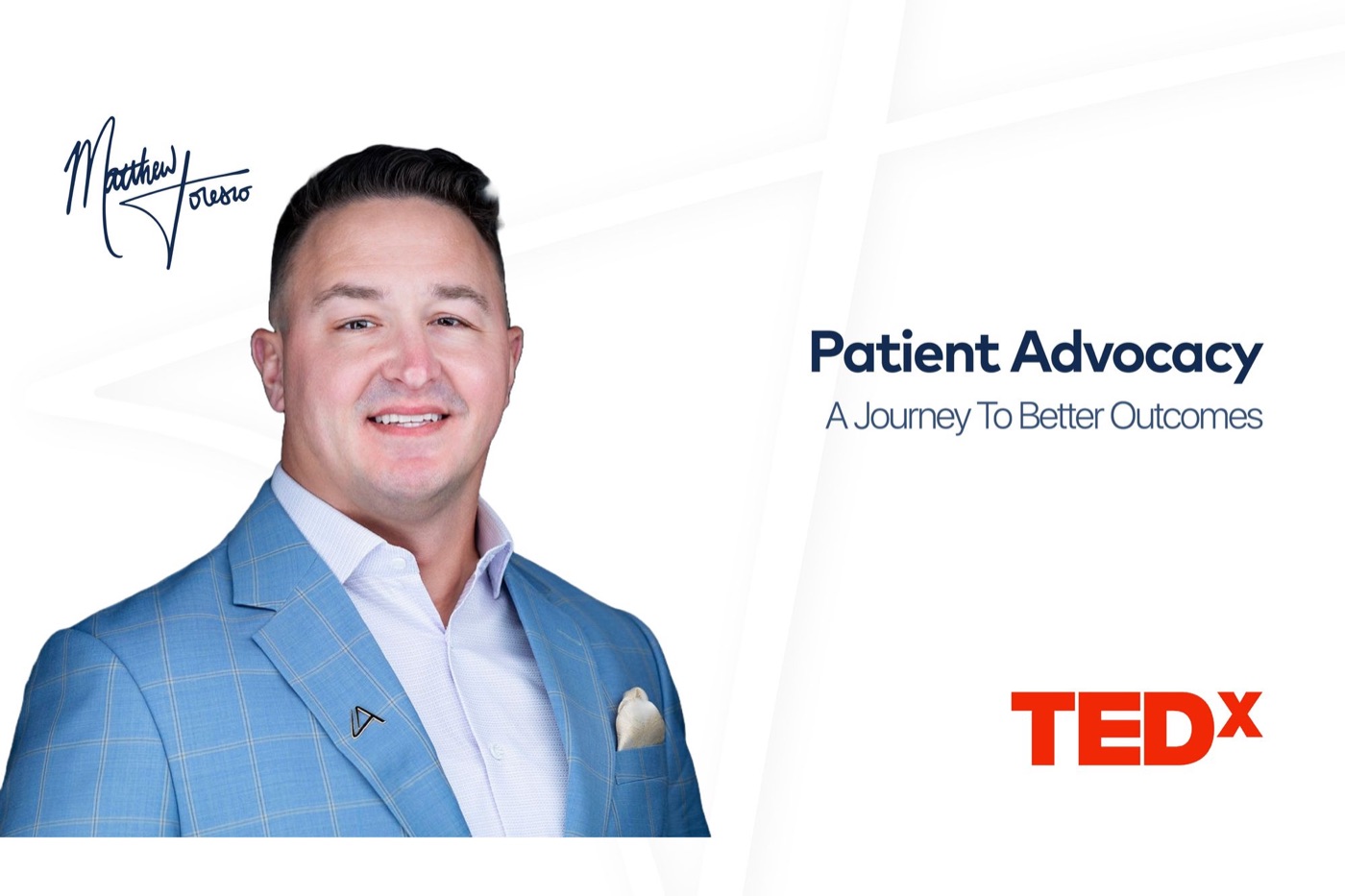
Matt has spent more than a decade guiding patient advocacy functions inside pharma, biotech and medical device. He runs his own nonprofit, EMPWRD Patient Foundation, and was a chronic pain patient: an 18-year cervical spine patient journey, including a 13-hour cervical reconstruction surgery in May 2023. He uses all of that experience to guide today's advocacy leaders to be their best. His TEDx Charleston talk on patient-led healthcare surpassed one million views as of April 2025.
Archō is an independent advocacy intelligence partner for life sciences. It runs ELAVAY, the syndicated advocacy intelligence study, plus Archō Advisory, Archō Training and the BIOADVOCATE Benchmark. About Archō
Hear what advocates said. Then decide what changes.
Request your private meeting pack, or book a briefing on the 2026 cuts with Matt Toresco.